Reducing Institutional PDF Bloat by 87%
Role: Digital Strategist / Web Lead
Scope: 1,400+ Assets | Full Accessibility Remediation
Tools: Google Sheets, Acrobat Pro, Siteimprove, Drupal CMS
Scope: 1,400+ Assets | Full Accessibility Remediation
Tools: Google Sheets, Acrobat Pro, Siteimprove, Drupal CMS
________________________________________________________________________
The Situation
Over a decade of decentralized uploads had left the college with a massive, unmanaged digital footprint. The website was cluttered with 1,436 legacy PDF files, many of which were outdated, redundant, or non-compliant with federal accessibility standards. This digital bloat created a poor user experience for students and a significant legal risk for the institution.
The Task
My objective was to perform a comprehensive digital audit and footprint overhaul. The goals were to:
1. Identify and eliminate outdated or unused content.
2. Convert essential static documents into responsive, searchable web pages.
3. Ensure the remaining documents met WCAG 2.1 accessibility standards.
2. Convert essential static documents into responsive, searchable web pages.
3. Ensure the remaining documents met WCAG 2.1 accessibility standards.
Action
Using guidance provided by the Kent State University Web Team, I developed a systematic "Triage and Remediation" workflow to handle the massive volume of data.
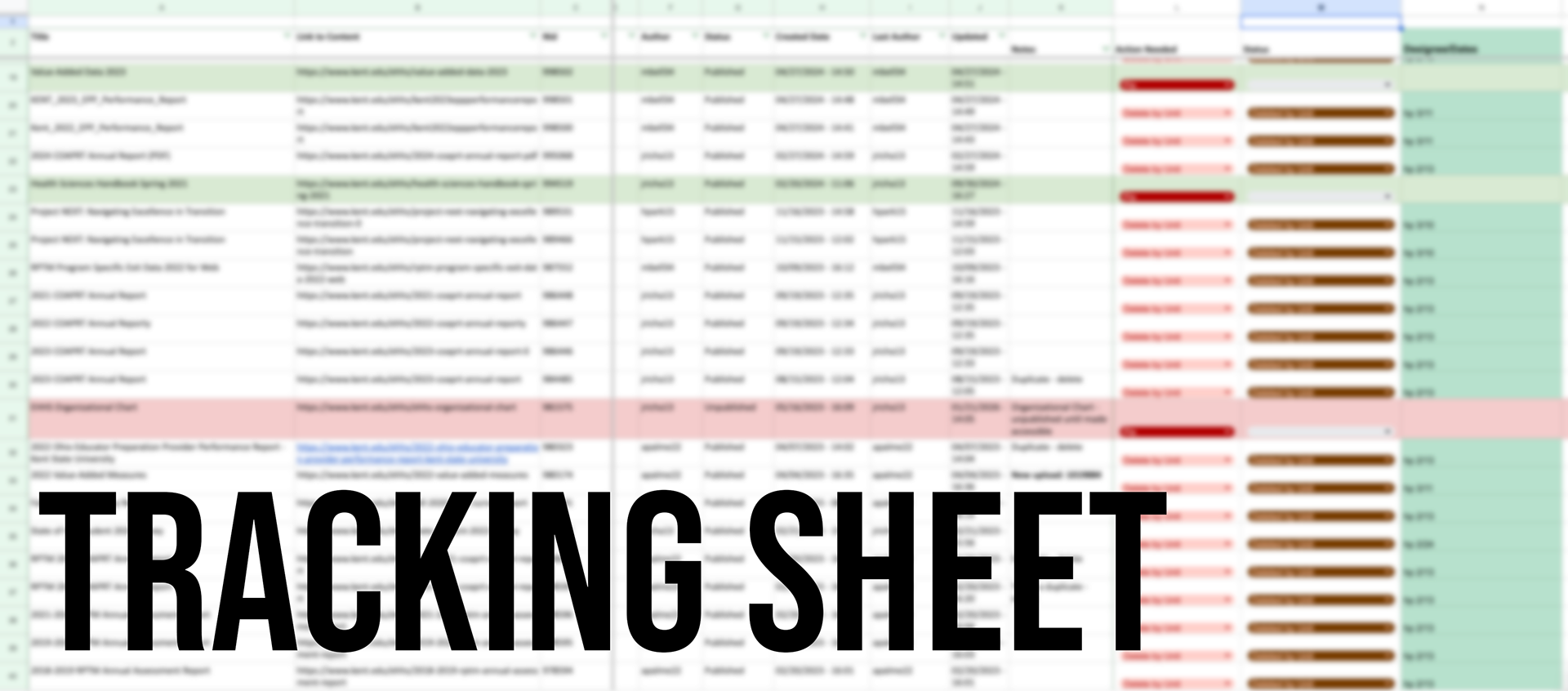
• The Audit: Using a centralized tracking system in Google Sheets set in place by web team, I tracked "Last Modified" dates, ownership and publication status.
• Content Triage: I spearheaded a "Delete-First" strategy, collaborating with department heads to justify the existence of each file.
• HTML Transition: For high-traffic documentation that weren't forms and provided static information, I moved the content directly into Drupal, replacing PDFs with mobile-friendly, accessible webpages.
• Technical Remediation: For the remaining essential documents, I performed manual remediation, fixing tags, alt-text, and reading orders to ensure screen-reader compatibility.
Result
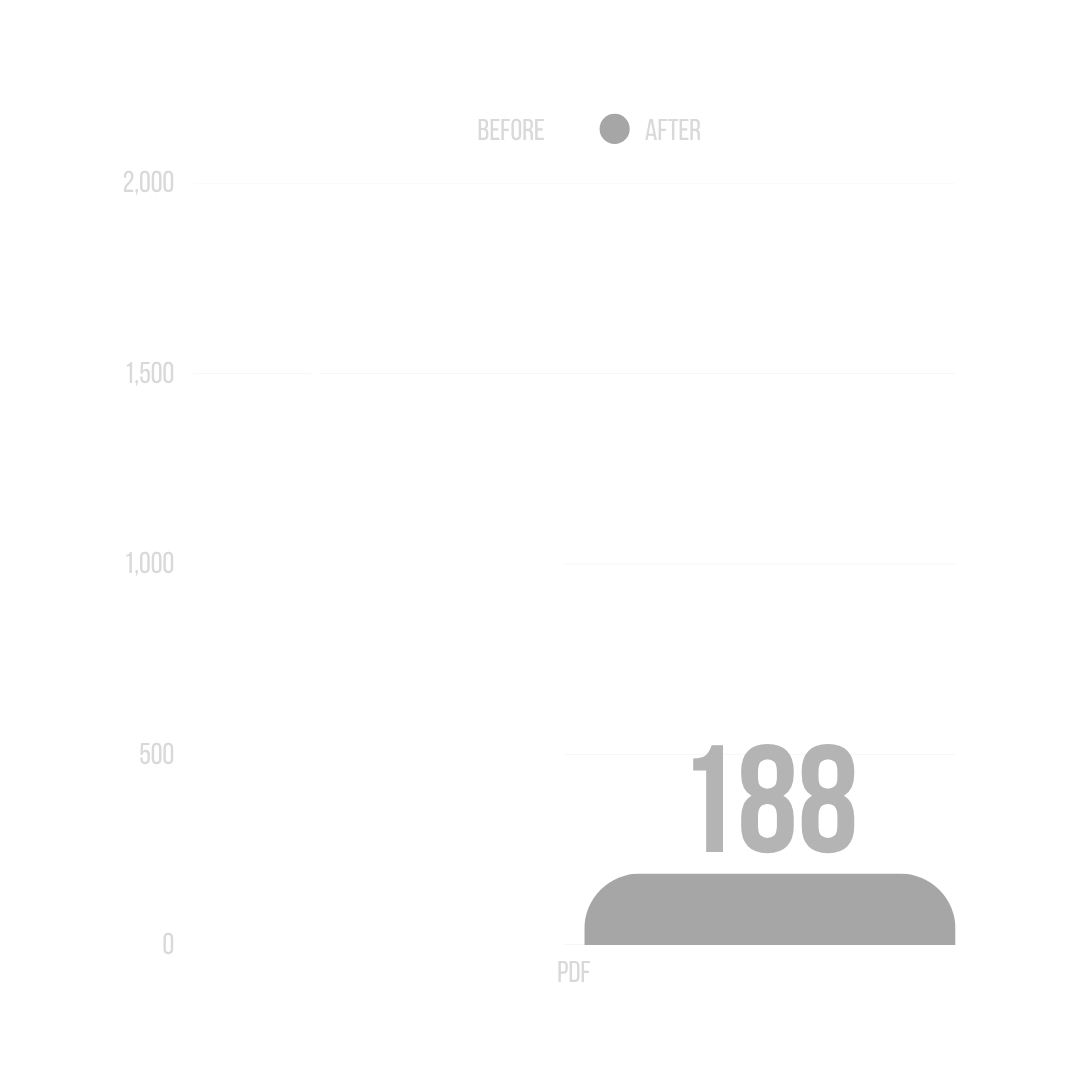
The project resulted in a leaner, faster, and more compliant digital environment. I successfully reduced the PDF library from 1,436 to 188 files—an 87% reduction in digital bloat.
By removing 1,248 "noise" files, the internal search engine accuracy will improve, allowing students to find critical information and policies faster.
We eliminated thousands of potential accessibility violations, protecting the college from compliance-related legal risks.